Simple Insight
Just another WordPress.com site
Why I’m a Whale: Nothing is Freemium
Posted by on February 9, 2013

Why I’m a Whale: Nothing is Freemium
A few weeks ago, I started playing League of Legends again because I finally had some free time. However, before I actually started playing, I spent 20 dollars on Riot Points, the currency that League of Legends’ development team, Riot, exchanges for cash which lets players buy various things in-game.
I spent the money without much of a second thought. As someone who now works, what’s 20 dollars?
This week, I’m starting to play TERA Online, a once pay-to-play massively multiplayer online roleplaying game that’s gone free-to-play.

For those that don’t know what most of those terms mean: pay-to-play means you pay a monthly fee upfront to play the game for one month, usually around 10-15 dollars, typically in addition to a box price of 60 dollars; massively multiplayer online roleplaying game, or MMORPG, means you play a character in a gigantic and persistent digital universe with countless other players alongside you; and free-to-play means you pay nothing to play a game—all you need to do is download the product and you can play, for free, indefinitely.
To return to TERA, before the game became free-to-play, I spent 20 bucks to buy the box from Amazon, who was having a sale—the game’s box is 40 everywhere else. Buying the box would afford me “Founder” status, which bestowed more character slots, a larger bank, an electrified mare mount, and much more. Plus, because I bought the box, I also acquired the Tawny Huntress pack, a golden lioness mount plus a large chunk of in-game currency. I knew I would play TERA, so for me, the small purchase out of my bank account didn’t seem like much.
I’ve been playing TERA for several days. I’m having fun—it’s exactly the same game I played before, the game I wanted, with no over-bearing monthly payment fee…but for some reason, I wanted to buy the Sleipnir mount, an ice horse mount that leaves a trail of cold mist in its wake. I already owned two other mounts, both just as fast as Sleipnir. It would cost me 20 dollars to buy; while TERA is free-to-play, they generate revenue by selling premium items, such as Sleipnir. This makes TERA a freemium game—it’s free, but you can pay for mounts, performance boosters, and costumes if you want.
Why am I reaching for my wallet for this item? What does it really benefit me? And at what cost?
Why am I spending money on something that is free?
Step One
I have a confession to make: I’m a whale.
A whale is an industry insider term for someone who spends lots of money on a freemium game, and I’ve been a whale for some time.
The first time I bought something for a free game was Diablo 2. Now, it’s a misnomer to say Diablo 2 is free, but what I mean is, Diablo 2 had no monthly fee. To me, as a kid, that meant it was free (thanks for buying the game, dad, and thanks for letting me play it, mom). With no monthly fee, I could drop countless hours into the game worry free about any monetary constraints, although as a 12 year old, I didn’t really worry about money—rather, I felt guilty about what I asked my parents to spend and continued to play the game regardless, which is pretty close to being worried.
In Diablo 2, I played a paladin, a holy warrior sent by God to destroy all evil, which I loved. But, after a while, I was struggling to succeed at the game. This made the game less fun. I wanted the game to be fun again. What I needed was something to do that: gear.
Gear is what drives most MMORPG players, by and large. Of course, there are people who play MMORPGs for many other reasons: to be social, to escape daily worries, to explore a world, or to conquer evil or other players. Gear, however, is the large cog that enables most of those pleasures. If I want to see the next dungeon, or defeat the next boss, or to feel like I’m succeeding at something, gear enables for all those goals to be fulfilled and my success readily measured.

The piece of gear I was buying was some chest plate with a huge name, a bunch of effects, and double digit statistical gains all over the place. This would be the thing to take me to the next level. I spoke with my dad, and after countless minutes of presenting my cogent and thoughtful arguments (“PLEASE DAD I NEED THIS.”), he said we could buy the item. This involved some black market pageantry: we first had to buy the item, confirm the purchase, wait to hear back, tell the vendor my character name, meet with the vendor at a specific time and place in game, use a cryptic message to verify I was the buyer, and only then I would own the chest plate. I did all this, and soon the gear was mine.
For the times, they are a-changin’
At some point, I stopped playing Diablo 2…well, no one really ever stops playing Diablo 2, but I stopped playing for a while. We had spent roughly 3-5 bucks on the chest plate, along with one or two other item, and in my head, I now owned that piece and could come back whenever I wanted. This isn’t 100% true, since after a period of inactivity the character is wiped. But in my head, there was nothing to worry about.
After Diablo 2, I played many other games. The next freemium game I remember playing was Gunbound, a competitive game in which players shoot at one another from on top of cute animals with mounted canons. Gunbound didn’t have the universe that Diablo 2 did, but it was still really fun. If you’ve played Worms, the game is basically Worms but the animals’ canons match up with different kinds of weapons.

As someone who played a lot of Worms with friends, I didn’t need to spend money to be good at the game. I knew how to shoot each canon fairly well and had a lot of fun doing so. But, Gunbound had these costumes you could buy to dress your character. With these costume items, you could make your character look like how you wanted, beyond the basic options offered in the game. Since I was playing the game a lot and constantly looking at my character, I felt compelled to personalize him. After a quick meeting with my father (“PLEASE DAD I WANT THIS.”), I was able to buy a few costume items, which made my guy kinda look like Indiana Jones…I like Indiana Jones.
After several months, though, I stopped playing Gunbound. It was fun, but eventually I moved on to other games and to writing. And one game in particular.
Paying to Play
Like a huge chunk of the gaming community, I played World of Warcraft for some time. This was my first experience with asking my dad to pay for a game monthly (“Dad, I’d really like to play it.” …I was 18 or so now). The compromise of playing it would mean I couldn’t ask for other games on occasion, but at the time, World of Warcraft was this otherworldly experience (for those that care, this was The Burning Crusade days). It had this huge world that just seemed to go on forever. You could do heroic quests, visit amazing places, talk to tons of people, fight tons of people, get lots of gear, and it was the perfect difficultly. I finally had a game I didn’t want to spend extra money on.
After 3 months of playing during most of my free time, I reached the top level of the game. It was a truly rewarding experience hitting the top level. It felt like validation for all the hours sunk into the game.
At the time, I was leveling with some online friends whom I had formed a guild with. However, due to disagreements born out of miscommunication, a few of our top officers left the guild, leaving me and the guild leader to run a large, disorganized group of over 100 players, a hodgepodge of max levels, mid-levels, low-levels, some active and some not.
The guild leader and I wanted to tackle the end-game dungeons as soon as possible, despite our guild drama. We couldn’t do this with a bunch of inactive members, most of which who weren’t the top level, the ground floor requirement for the end-game content. An executive decision was made, and we cut anyone who wasn’t top level. The next step: marketing and production.
There’s a Calendar on the Guild Website for a Reason!
Since I was starting college, I had lots of free time on my hands. I spent countless hours in Orgrimmar, the central hub for my faction, spamming the digital air waves with advertisements for our guild. Anyone who was the top level could join, as long as they wanted to adventure into Warcraft’s dungeons.
Marketing the guild was actually a lot of boring work. You sit in town, calling out to the masses over and over, fighting for visibility against prominent and established guilds and Warcraft’s gold vendors (much like the Diablo 2 vendor I bought from). When I finally did catch a fish, I would have to explain where the guild was at the time (at the start of end-game) and what we had done (nothing) and how active we were (there weren’t many people). This was a hard sell for the majority of top level players, but we managed to wrangle a group together large enough and strong enough to take on the first dungeon, Karazhan. I was excited.

To enter Karazhan, we needed 10 people and a pretty specific group make-up. We needed 2 guys to be the meat shields for all the damage, at least one guy to heal the meat shields, and a mixed bag of damage, some magic guys, some melee guys, and some ranged guys. To organize all this, I bought a website and a Ventrilo, which is like a place where everyone could conference call each other for communication during the dungeon. In this case, I didn’t ask for my dad’s help and used some savings I had instead.
During the preparations for the dungeon, however, my guild leader slowly became less and less active, leaving me at the mast as co-guild leader. I did my best to let everyone know WHEN we would be raiding, WHERE we would be, WHO would be raiding, and WHAT everyone could use to help me organize this whole parade: the guild website, which had a calendar. I told people MAKE SURE to sign up for the raid slot they wanted and to PLEASE show up.
Try as I might, I would constantly have someone missing on raid night, someone else complaining about not knowing what was going on, and half the guild not caring. Worse, as a stealthy rogue, people rarely wanted to party with me outside of the guild because rogues were extremely popular.
To get away for my guild responsibilities, I started playing on an alternative character, a powerful warrior capable of defending against waves of enemies. I leveled this character up to the low level dungeons and finally got to be a meat shield myself in small 5 man groups. In one dungeon, I managed to tank almost 5 rooms at once, controlling some 30 odd enemies’ aggression to be on me while my team destroyed the group. It was completely engrossing and totally reinvigorated me. People wanted to play with me, and I did really well at my role.
Meanwhile, on my main rogue character, the guild fell apart. The guild leader hadn’t been around in months. No one listened to me. And many of our once active members had left. In the final days, my guild leader showed up and told me his life outside the game had become busy…but worse, he had been playing on an alternative character himself on another server and was on an active guild there.
…I made the decision to disband the guild, and I cancelled my subscription, promising to never return to Warcraft or a pay-to-play service again. The reason was that Warcraft had become work, work that I paid into every month just to show up. I always felt like I was on a time clock and that I needed to maximize my time all the time. I couldn’t do it, and the guild, any longer. For years, I refused to play any massively multiplayer game, especially anything I had to pay for monthly, no matter how cool it looked (Wraith of the Lich King, I’m talking about you).
I took my character, drowned him in Booty Bay, inside a sunken ship in a shallow cove, and logged out, never to return.
“0 – 13 Rammus”
In mid-2010, I was introduced to League of Legends. LoL is a complicated game to explain, but the quick-and-dirty is this: two armies of equal strength battle each other at a standstill. You, along with 4 other players on your team, are dropped into this battlefield. Your aim is to defeat the opposing sides’ forces and fortifications, protected by 5 other players. It’s like 5 generals who slowly influence a war until one side wins. Each player summons and controls a Champion, a particular character with a unique look and set of moves, to influence the battle in their favor.
Now, League of Legends’ freemium model is much like Gundbound’s: you can buy some vanity items, some performance boosters, and, of course, champions. Buying champions was ultimately my addiction.
What’s interesting about League of Legends is that, by and large, everything could be bought with in-game currency. Performance boosters and vanity items, such as visual overhauls for champions, could only be bought using Riot Points. And on the flipside, certain items, runes which provide small passive bonuses, could only be bought with in-game currency, which confused me as a whale. Why wouldn’t you monetize that?!
 In my first game of League of Legends, I played Rammus, “the Armordillo.” He was a beefy meat shield who was half World of Warcraft warrior, half Sonic the Hedgehog. He could roll into a ball, knock the enemy back, and taunt them for attention. I thought, how hard could it be?
I ended the game with 0 enemy kills and 13 deaths to the other team. If you don’t know how bad it is, it’s 0 – 49 in football, 0 – 5 in hockey, 60 – 120 in basketball, and 21 – -4 in mini-golf. This was a horrible performance. But maybe it was that Rammus didn’t gel with me. I looked at the free champions for the next week—every week they rotate a set of free champions, about 10 per week with 60-70 champions total at the time—and out of those champions, one of them looked sorta fun to me, Garen.
 Garen was the hero of Demacia, a fictional province in the League of Legends lore. He had a big sword and hefty armor, and every time you used one of his moves, he screamed “DEMACIA!” I finished my first few games around 5 – 5, 4 – 5, and 6 – 4, which was all respectable for a new player. What was more important was that I was having fun, for free. This made me want to play more. I played a bunch of games, gaining in-game currency, and at the first possible chance, I bought Garen, so I could use him whenever I wanted to. I played many games with Garen, but after a short period, I wanted to know about all the champions I was missing out on. Maybe I would be better with someone else?
Luckily for me, Riot had a fast track option, a champion bundle pack that included 20 champions at a massively reduced Riot Point cost (roughly 75% off what it would cost for each individual champion).
I looked at this option with some apprehension. By now, I had realized I had these tendencies to buy into freemium services, especially anything with massive savings, which I would use to justify my purchase. I could feel this tension within myself, this anxiety, like I knew I would buy the pack, but I wanted to fight with myself about it first.
I looked at my bank account…pack would cost like 40 bucks…and then the pack…and I flipped through all the champions making quick passes at their looks, since I didn’t have enough experience to guess how they would play…and then back to my bank account…and then back to the pack…and then I’d talk to my friend…”So what does this guy do? He has a robot arm and yanks people?! What about this guy? He flies a biplane and shoots stuff?!” …I love airplanes.
I bought the pack. I immediately played a bunch of champions. And for the next few months, I was hooked.
There’s a champion sale this weekend
After several months, I would play League of Legends less and less. This was not because I was bored. On the contrary, I did want to play. But, I was really dedicated to my education by this point, and I had the most fun playing LoL with friends. Only one of my friends was actually into the game consistently, my friend Paul, who had originally introduced me to the game, and at the time, we only met up once or twice a month. We didn’t always play LoL either.
I never stopped caring about League of Legends, though. I kept reading about the new champions coming out and the balance changes every month. I read about theorycrafting, looked at the forums for user created ideas, and religiously watched online streams of other people playing.
It wouldn’t be until Season 2 arrived that I would heavily play again, regardless of my friend being over or not. And of course, when I did come back, I instantly spent a bunch of money to buy everything I had missed. Now the reason to play was I wanted a bunch of champions and rather save my in-game currency for runes than spend them on champions; if I bought the champions with money, I could catch up to where I would have been if I had never stopped playing. I eventually afforded all the runes I wanted and played regularly with a group of guys. All was right in the world.
The sooner you leave, the sooner you go/Back to Massachusetts
 School took over my life again. I was an honor student the last two years of college and picked an insane workload to finish school relatively on time with advanced honors. Again, while I didn’t play League of Legends, I digested streams at an unprecedented rate. Now, there were pro-players who I was a fan of, who made me laugh, who I could learn from by watching. I memorized their inside jokes, their build patterns, how they did what they did and why. It was a weird period to know so much about LoL without actually playing it.
And around the time I graduated, I met my current girlfriend, my to-be-announced fiancee at some point, who I’m now expecting a child with. She was a childhood friend of my sister who lived in Massachusetts, where I grew up as a child. I had been living in Georgia, attending Georgia State University for Philosophy. To make us work, I would need to move, which again, used up a lot of my time. Then I had to job hunt, another period which I stopped myself from playing games so I could focus on getting a job.
Just before hunkering down for my job hunt process, I played TERA’s early access beta. The fast paced action and picturesque world made me instantly attracted to it, but I knew at launch it would cost money per month, a pay-to-play model. I had not forgotten my promise to myself after World of Warcraft, which I was 4 years clean of. TERA was fun, but not 15 dollars a month fun, especially not during a job hunt.
After several months of searching, I ended up with what could only be described as a dream job, working within the game industry.
As someone who had never worked before, though, I didn’t expect work to take up as much time as it did. Like I had in the past, I poured myself into my job, doing everything I could to be the best that I could, and spent my free time keeping my relationship happy. I had to learn how to be okay with only getting 2 hours a week to play video games as someone who had, at times, played 40 hours or more a week.
It was challenging, but I did the best I could. I kept watching League of Legends streams, but it was next to impossible to dedicate 30 minutes, a typical LoL game length, to anything. If my girlfriend needed something right away, I didn’t want to be the guy saying, “BRB in 2 minutes,” when 4 other people were relying on me to be there. I made what some would call the “adult decision” to push my hobbies aside for work and my significant other.
The Beginning of the End
Work has slowed down now, and my contract will be ending soon. Our baby will be born, knock-on wood, March 1st. My life will be ramping up once again shortly, but while its quiet, I decided to check in on TERA and League of Legends again, now with time I could dedicate to either. In the past months, I had been quietly watching TERA, since it announced it would be free-to-play as of February 5th. And of course, I’m playing an Amani Lancer, a dragon-born being who wields an unbreakable shield and a pointed lance. And as I mentioned earlier, I had bought the box for special benefits and was awarded two mounts but neither looked really cool.
Again, I felt anxious. I stared at Sleipnir, with his ice mane ad glowing eyes. He looked more proportional to other avatars and had these special effects. Why did I want this mount when I had two?
Because it is fun
Looking back at all the games I bought into and inevitably the one I refused to, the connection was these free-to-play experiences were all lots of fun and something I wanted to sink time into. I did some mental calculus with myself, weighing the options and the value of the money, and said, “Yes, I want to spend money.” In contrast, World of Warcraft made me spend.
And that’s huge. When I was obligated to play because I had spent 15 dollars, it felt like the experience could end at any moment because if I ever didn’t have the cash, I couldn’t play. But all these free-to-play experiences, they kept me coming back. For instance, at the start of last year, I played Diablo 2 again, a ten year old game, in anticipation of Diablo 3’s release. I never stopped caring about League of Legends because I knew I could always go back to it, picking up from where I left off. And while I hadn’t gone back to Gunbound, it felt good to support something I wanted to support, rather than paying because I had to, in addition to the cool digs I acquired.
Obligations aren’t fun. They feel constricting. They made me feel anxious for an entire month, rather than for 5 minutes. And every time after I spend my money, I feel good because I’m actively supporting a huge team of people who worked extremely hard to provide me with a powerful and deep experience, and they aren’t forcing me to spend money if I want to keep experiencing it. Instead, they say, “Hey man. Have fun, but support if you can.”
I don’t mind paying 60 bucks up front, but the 15 dollar a month model is something I still don’t want to endorse. Instead, I rather pay the money because the game is fun, not because I have to. While I may spend more than 15 dollars a month for a free experience like TERA, it certainly doesn’t feel the same. It feels like giving to an awesome charity rather than paying my pusher. Freemium isn’t a dirty word for me—when done right, like TERA, it’s liberating.
Currently, I’ve spent at least 10 dollars on Diablo 2, at least 15 on Gunbound, probably 240 on World of Warcraft, and over 300 dollars on League of Legends. Only 40 on TERA…so far.
I am a whale, and I’m proud to support the games I love.

P.S. You get a blue halo costume item for buying from TERA’s store. I plan to wear it.
Legal Disclaimer Time
Posted by on August 26, 2012
So, I got a job in the video game industry. Dream come true!
However, I need to make a quick, legal disclaimer that the views of this blog are mine and mine alone and are not representative of the company I am with nor any of their subsidiaries, parent company, or the parent company’s subsidiaries.
Any view points presented–past, present or future–reflect my personal thoughts, and nothing further. That is all. Thanks for reading.
-C. Fidalgo (dated August 26th, 2012)
Playing vs. Conducting: RPGs Redefined
Posted by on August 22, 2012

Recently, on the RPG Gamers’ subreddit, someone posted a Top 5 Console RPGs blog post. Prior to this post, I had some ideas floating around about the role-playing game genre, so this post is the beginning of those ideas. The conclusion I arrived at surprised me, so hopefully, if you come from a similar game history background, you’ll be surprised too.
First, I don’t agree with the Top 5 games chosen. In descending order, they were: Odin Sphere, Disgaea, Persona 4, Chrono Trigger, and Final Fantasy VI at number one. The main reason I wouldn’t pick these games (at least most of them) is because I’ve been trying to mull over what it means for a game to be an RPG. What does it mean to be playing a role within a game?
Certain RPGs, the Japanese staples–games like Chrono Trigger, Final Fantasy VI, and Dragon Warrior–came to mind first for me, up until recently. I want to reiterate that I love those games. But, how much of those games do you actually play a role?
Hang with me for a second. In those games, you rarely ever make a decision that changes the story (Chrono Trigger has one choice with 13 options). In most of those games, you make no character change options either. You make barely any monumental changes to the characters’ play-styles. So, you have little to no say in the story and make no changes in the characters growth, both story telling wise and play-style wise. Are you really playing the role if you are given the role with no options?
When I take a step back and deeply examine those games that, to this point in time, universally have been defined as “role playing games,” I come to the conclusion that there isn’t much that I do at all. I’m more of a passive absorber of the story. I take in everything but put little out.
So, what are examples of playing a role in a game? Here, I think of more PC games, things like Baldur’s Gate, Elder Scrolls, and The Witcher. Now, personally, I don’t enjoy that group as much, but these games have you completely in-charge of the character progression, the decisions they make, how the story will unfold, and ultimately how you want to play the game.
Now, I should clarify that certain games are split between the sides. Final Fantasy 1, for instance, allows you to make the party and have control over those characters. However, the story doesn’t change based on your choices. Other games, like the Mass Effect series, look more like Final Fantasy VI because of the final ending that Bioware chose for the series: you can have all these wonderful sidequest and rich, branching stories, but ultimately, there is one way the game will end.
Furthermore, this theory has some sorting out to do. If I were to critique my own theory, I would say an actor still plays a role even if the story is written out and all the lines are given. The actor still becomes the character in a play. But, I’ve never, as far as I can tell, felt like like I was Crono, or that I was Sabin, even though I love those characters, mainly because they aren’t me in any sense and none of my agency is in them. Because my agency isn’t directing any of the story or character elements in a profound way, I don’t see any of myself in the characters. This disconnection might be the reason why few people have been emotionally affected by a game. There’s too much of a gap between them and the characters versus what other games are like.
And before I ready my flame shield, I want to say that this whole discussion shouldn’t come with any normative claims. I am not saying that one style is better than the other. All I’m saying is we should reexamine what the genre RPG means.
I’ll end this mini-theory with another analogy. I know that the train conductor, in one sense, “drives” the train, but I think there’s a reason why he’s not a train driver. Maybe most Japanese RPGs should be called “Party Conducting Games” instead–you don’t control the direction of the party nor can you change any component of the party; you can only control how fast you reach the end.
Impression: Unepic
Posted by on August 10, 2012
When it comes to movies, I typically prefer dramas: something serious that makes me think. Video games, on average, are no different. I like serious adventures with dark settings, political intrigue, and characters steeped in flaws and problems, which they grow out of (Final Fantasy Tactics is a great example). Unepic, on the other hand, is a laugh-riot, birthed from geek culture, with some fun gameplay. Here’s my breakdown of this little known indie-game.

Unepic follows Daniel who, on the way to the bathroom during a table-top gaming session, stumbles upon an ancient castle. There, an apparition named Zeratul by Daniel, based on the Starcraft Dark Templar by the same name, tries to steal his soul, but due to Daniel’s lack of one, Zera (as he is affectionately called) ends up stuck in Daniel’s body. The game revolves around Daniel trying to escape the castle and return to his world while Zera attempts to kill Daniel with bad advice whenever possible.
The plot is original, and the dialog is sharp, funny, and always aware of the 4th wall, breaking through it with allusions ranging from Doctor Who to Star Wars to Legend of Zelda, and many more.
Many of the quests, especially the final one, are written with a strong sense of self-awareness about the history of video games–it’s like the game is written by your gaming pal, and together, you’re joking about the hilarious stuff video games make you do. Other quests, such as Bureaucracy, critique the real world through the language of video games, which is a welcome surprise.
Overall, the writing and story are the selling point of the game: if you’re a gamer, especially an RPG gamer, you should play this game for the writing alone.

That being said, let’s talk gameplay. Unepic is a Metroidvania, RPG mix. You move across platforms, need to time attacks, and have stats to level up. The game provides a wonderful sense of diversity in terms of style, but it comes with some drawbacks.
For reference, I played on Hard because I like a little challenge, and the game rewards players for playing on harder difficulties (you’re awarded more skill points per level on harder difficulties).
To start, Unepic ain’t no casual, shovelware experience–it is an unforgiving, diet Dark Souls. You will fall on to unexpected spikes when you miss that jump; you will turn into sliced meat as suits of armor chop you up like prosciutto; you will die.
However, the game makes it very easy to save and stay alive. There are numerous items that allow you to teleport that come with no limits on usage or drawbacks, besides taking the figurative walk-of-shame back. As long as you play smart, you shouldn’t die too often.
As you play through the game, slay monsters, and complete quests, you’ll gain levels which give you skill points. You can invest these skill points into various attributes, such as different specializing in particular weapon types, schools of magic, more health, alchemy knowledge, or your ability to equip stronger armor, and depending on your choices, different styles of gameplay emerge. Want to be a paladin? Choose to level up armor, constitution, maces and light magic. Want to be a sorcerer? There are 8 schools of magic and equipment to match your elemental style. Want to be a rogue or thief? Put points in bow and dagger and stay aware of the enemy pathing for backstab opportunities.
Picking a playstyle is as hard as playing. Each kind of enemy has its own specific weaknesses: some resist certain elements; some are strong against certain types of weaponry; some are invulnerable to projectiles (wait for the Mage Tower on this one–Trust me…). The game constantly pushes you to play one way or another, typically based on the castle environment you’re in. Sometimes, putting all your points into your Bow skill pays off; other times, you might as well be unarmed. Because your skill point choices are semi-permanent–you can acquire an item that lets you re-specialize once midway through the game–it becomes very difficult to plan your next move. The choice you make now could screw you over in an hour.
The great thing about this system is that when you do acquire the re-spec item, you will have played a sizable chunk of the game, enough to know what’s been more handy than not. When I re-spec’d, I decided to go a mixed approach, focusing in swords, bows, and a few schools of magic, along with my constitution and armor skills. This allowed me to take a lot of abuse while trying to figure out the best solution for the situation. Because I like paladins, I wanted to specialize as one, but logistically, I couldn’t because holy magic doesn’t affect all creatures. If my enemy were farther than a swing of my mace, I’d be more or less screwed. I’m sure there are numerous ways to play, and different styles shine in different situations. But, I wouldn’t specialize in any one thing; always have a back-up plan (Bows are your friend).

While traveling along in your adventure, you’ll run into numerous quests, many of which contain situational rewards based on the current area. For example, in the Halls, there are numerous suits of armor which can soak up strikes without flinching whereas most enemies hesitate after being struck. To combat this, deep within the Halls, you can find a pet which paralyzes enemies, allowing you to attack the suits without much threat.
I think this example, and others like it, shows that the one-man creator of Unepic, Francisco Téllez de Meneses, is clearly aware that people will play Unepic in various ways, and the player shouldn’t be punished for picking this way or that; you just won’t be super successful everywhere with one style (and you really shouldn’t be, in all fairness–this isn’t Halo). Some might see this as a balancing problem, but the flipside is that the game manages to be a challenge throughout. I prefer that over a walk in the park.
The production, all made by de Meneses, is quality stuff. Enemies look detailed. The music is reminiscent of older games, especially the Garden stage (Give it a listen here; it really reminds me of one of my favorite tracks, Vampire Killer, from Castlevania). Each environment has a distinct character and visual style that matches the prominent element of the chapter. Mad scientists, Tesla coils, Bunsen burners, and stone golems come to life fill the Laboratory, invoking thoughts of Frankenstein. Cloaked necromancers, skeletons warriors, purple flames, and arcane symbols mark the Catacombs. And tentacles, slimes, and leach-filled canals cover the sewers. There are 10 unique areas, each with their own musical theme, horde of enemies, and powers to gain. I wish there would have been more platforming based powers to gain (there’s only one I know of with a 99% completion rating), which are usually common for Metroidvania’s, but Unepic‘s RPG elements make up for that.
Overall, Unepic, as a one-man work that costs 10 dollars, is worth your time, if only for the writing. The gameplay is solid with no major issues, although it is unforgiving at times. Don’t expect to mindlessly go through the game; you need to think to succeed. I see that as a pro, though, not a con.
[Pictures courtesy of IndieDB.]
Why Are You Playing That: Secret of Mana and Update
Posted by on August 3, 2012
Update first: Hey folks! It’s been several months, but I’ve been trying to find a job. I think I might have something actually lined up. Nothing is locked up, but I had my best interview yet, and the people I met were really nice and welcoming. Things are looking good. =)
With my job situation looking better, I want to get back to writing in my free time. In the next few weeks, I want to do another MetaGame Strategy post, my impressions of Unepic, and another WAYPT for Super Metroid. For now, a post that is long overdue.
—

Secret of Mana is one the quintessential Super Nintendo role playing games (RPG), especially for action RPG fans. Being a huge action RPG fan, I’ve always loved the Mana series, even when it’s not at its best. A few months ago, I replayed Secret of Mana with a critical eye. Is it still a good game now? I definitely think so. Here’s why.
First, there’s the gameplay. Most people complain about the artificial intelligence (AI) because it is understandably stubborn and unintelligent. At times, it will get caught, hang up the player from running, move into attacks badly, etc. You can modify the AI’s behavior–changing whether it should approach, stay away, guard or attack–but even then, it’s not the best. AI hasn’t progressed that far anyway (I can give you countless examples), so I don’t take it as a personal hit against the game.
That said, there’s still a lot of great stuff going on in Secret of Mana. For every attack, there is a percentage gauge that builds up to 100% after every attack. You can attack at less than 100% in a bind, but you should try to land 100% attacks consistently. Usually, when attacked, most enemies fall backwards and become inactive just long enough for another 100% attack to charge, so there’s a certain rhythm to the fighting. There are also charge attacks, attacks where you hold the attack button and gather power for an all-out strike, on a risk-reward system (for example, you’re slower while charging) which requires you to have some knowledge about the hit-boxing, physically where you and enemies are vulnerable to attacks, and spacing, or keeping a watchful eye over the distance between you and the enemy. You can also control your own knock back when an enemy hits you hard; if you fall in the right direction, you can escape a follow-up attack. And you can even dodge on occasion by attempting to move away from the enemies attack. All these elements make the actual fighting mechanics closer to a simplistic fighting game rather than an RPG or Zelda game. In addition, the magic, once you get it, covers up a lot of the AI problems because now that there’s some reason to keep these two punching-bags-that-are-your-teammates around.
Finally, one of the best features is the multiplayer. If you have a second controller, a friend can plug-in and easily drop into the adventure with you, taking control of one of your allies. Massive Multipler Online games have largely taken the reins for multiple character adventures, but before all of that, there was Secret of Mana. It really is a blast to get a friend and go through this game. It gets rid of most of the battle problems and allows you to see the battle system for what it is.
Now, second, there is the presentation. Visually, the game is its own. Secret of Mana uses a color palette rarely seen by most games of the time, especially RPGs. Everything is bright and coral or pastel. This is even more pronounced now given that the palette is still unto itself, and the palette endures across the series. Secret of Mana and the rest of the series just has this tropic feel. You know when you’re playing one.

The other big element is sound. If you’re an audiophile, this is a fantastic soundtrack to listen to from a music standpoint. The rhythms that Hiroki Kikuta uses are intricate; the sounds are rarely used by others of the time; and the tracks can stand on their own, even though he clearly made the tracks to loop and hang in the background. “Distant Thunder”, “Did You See the Ocean”, “Steel and Snare”, “Mystic Invasion”, “Leave Time for Love”, and “Meridian Dance,” purely from a rhythm standpoint, are off the charts. It is clear that Square just let Kikuta do what he wanted in terms of song writing, and he comes out with these bombastic tracks that are great by themselves. You can even tell he was pushing the system to its limits in terms of audio engineering, because the sound effect track often shares a track with the music. It’s an unfortunate limitation of the times, but if you listen to the tracks on their own, I think you can really start to appreciate them and the work he did (also listen to “Angel’s Fear” for his softer side along with “The Oracle” for an extremely avant garde track).
Finally, there is the story, which is somewhat unique. In other mediums, particularly film, a few “Gaia” themed stories exist, notably Princess Mononoke, Pocahontas, and more recently Avatar, which all revolve around saving nature, not just human life, and Secret of Mana is the video game industry’s shining example of that theme. The whole series reiterates this theme as well. The characters aren’t the best in terms of growth and change, although there is some. Also, the environment hints that the Secret of Mana world might be our own, just in the distant future, with things like advanced technology being in the past. There’s even a Japanese styled bullet train at one point. The final boss has its own interesting twist, but I won’t spoil it now.
The story is one of the weaker parts, in my opinion, only because the dialog is pretty bare with most of the focus going towards “This is what I/you do now,” versus “This is why I’m/you’re going to do this, and this is why it matters to me/you.” The second set of phrases, in terms of video games, is a lot more important because it aligns the player’s desires to beat the game with the heroes’ own personal quest. We start out wanting to beat the game but eventually feel for the character and connect with them because our actions align with the protagonist’s (this is some random game studies rambling of mine, though). Anyway, sufficed to say, the story is good, but not great.
One last thing: Secret of Mana, for its time, was highly rated and applauded. It was universally enjoyed. There are other games, specifically Seiken Densetsu 3 (or Secret of Mana 2 for us), that really are superior, which is a lot to say for an already amazing game. You’ll just have to import that game to see what I mean.
I still think Secret of Mana is worth a play now. It suffers a little bit from the parts being greater than the whole, but it’s still a marvelous game.
How to fix affirmative action for the better
Posted by on April 20, 2012
 I know I usually cater my writing toward gaming and I do have a Minecraft journal in the works, but today I want to talk politics, and specifically the issue of affirmative action.
History
A little history first: affirmative action became law as an executive order authored by John F. Kennedy in the very early 60’s. Much of Kennedy’s reasoning to enact the order did arrive from race—Kennedy wanted to help African Americans who historically were deprived certain privileges.
Kennedy and importantly Lyndon Johnson, who carried the torch after Kennedy, recognized that because of the treatment of African Americans in past years, it wasn’t enough to just say, “Compete with the rest.” African Americans and other minorities needed an extra boost to really catch up with their Caucasian counterparts to make the race fair.
“What’s wrong with affirmative action?”
Nowadays, some people think affirmative action is unfair because minorities can beat out their Caucasian compadres merely on the grounds of race. It should be noted that this idea is usually coupled with the belief that society has progressed far enough such that minorities don’t need special treatment.
Others feel like diversity is winning over quality and employers now select under qualified, minority applicants over Caucasian applicants merely based on race.
What Matters When We Help
Instead of trying to debate the merits of giving an advantage to the disenfranchised, something I believe we should do because of the reasons President Johnson had in mind, I want to talk about the core, universal intent of the order and how that idea suggests a new way to look at affirmative action.
Now, as I see it, Presidents Kennedy and Johnson wanted to aid the lowest of society in terms of opportunity, and Johnson recognized elsewhere that our ability is not just nature but also nurture. The environment you grow up in matters.
One of the largest factors for what kind of environment you’ll probably grow up in is you socioeconomic status (SES). SES can either focus on individuals or families and draws upon three variables, income, education and occupation, with occasionally extra variables like wealth.
Typically, if you grow up in a lower SES family, you’re growing up with working parents with little education or income in an area with similar families. And, two to one, if you’re a lower SES family, your neighbors, and more importantly, your community as a whole, are also lower. This can cause all sorts of problems, such as lower quality schools, higher stress situations for children, and less overall opportunity in the long run, specifically less upward social mobility, moving from one SES level to another, which is on the decline in the United States, says a recent New York Times article. Other factors, such as health, can also be affected by your SES.
Sufficed to say, SES is really important for determining how far you go in life.
A New Focus: Socioeconomic Status
What I want to propose is this: instead of trying to use affirmative action to correct for historical racial discrimination or discrimination in other ways, let’s move toward affirmative action for poor families, indicated by SES.
There are a lot of positives to this approach: for one, we would still be correcting for the problems of historical racial discrimination but without appealing to race. This is mainly because many minority families, most likely due to past discrimination, end up in the lowest SES level, particularly African American and Latino families. Those families that need help would still get it, but poor Caucasian children would get the help they need as well.
In terms of fairness, neither of the children chose to grow up in a poor family and each is limited in terms of opportunity: let’s help them both equally.
Second, this stops the proliferation of discrimination problem. The proliferation problem can be expressed as this: there’s a number of ways individuals are unique that are not chosen, yet we don’t use affirmative action to correct for those problems. For instance, people can be said to discriminate based on beauty and height, but we don’t use affirmative action to control for those factors. There might be numerous factors we need to control for if we want to level the playing field based on non-selected attributes. Instead, let’s target a root case for inequality and the means to improve it.
Moreover, this stops so-called “reverse” discrimination (really, just discrimination) against Caucasian people who grow up in similar backgrounds to some African Americans. There’s no real reason why an African American should be chosen over a Caucasian purely based on race if they come from remarkably similar SES backgrounds, or vice versa for that matter. Both are equally matched. But if an African American applicant comes from a lower SES status than her Caucasian twin and she has an equally impressive academic background, then chances are she has worked harder because she, on average, would have to deal with the problems that come from living in a low SES family, as expressed earlier. In addition, in the opposite example where the Caucasian applicant comes from a low SES background, they won’t be discriminated against based on race when they, presumably, had to work harder.
The Unintended Consequence and How to Prevent It
In terms of cons, however, this view might allow discrimination to propagate. If we remove a safety net for discrimination, then we’re allowing more back into the system.
To stop this problem, I believe we do what we’ve been doing: upholding anti-discrimination and equal wage laws. So long as it’s illegal to discriminate on race, gender, etc., and non-Caucasian, non-male employees are paid the same, fairness can be held, which was the aim of Kennedy’s executive order in the first place.
Conclusion
In summary, I think this idea keeps the original, underlying intent of the order but uses a scalpel instead of a hatchet. Show the doors of opportunity to everyone, but let’s help those who need the keys most—not based on race or gender—but on the more salient factor, SES background.
MetaGame Strategy 2: Expansion Pack Edition
Posted by on April 19, 2012

MetaGame Strategy 2: Expansion Pack Edition
After a long enough break, the next MetaGame Strategy is ready! Because Local No. 12 recently released the first MetaGame expansion pack, all the cards in today’s post will come from there. Also, I highly recommend grabbing the pack if you don’t have it–the cards are high quality and all the new options are fantastic expansions to the existing library.
If you don’t know how this works, see the beginning of my last MetaGame strategy post here. But the short version is this: two people; each side has 5 content cards; each person chooses to eliminate one discussion card; then they make their case for the discussion card that is left. Let’s shuffle up and deal.
First Hand

Second Hand

Discussion Cards

First Elimination
This hand is polarized between extremes: old and young. Desktop Dungeons and Superbrothers: Sword & Sorcery EP are recent indie creations and Gauntlet, Spacewar!, and Lunar Landing are dinosaurs. I don’t see either group as derivative: indie games try to be original although don’t always succeed (Desktop Dungeon is a notable example here but still a fun game!), and all the older games are originals which can’t be derivative. Moreover, I don’t think any of these go well with champagne and caviar. None of the games are especially classy (except maybe Sword & Sorcery) or require troves of money to play. Decision for now, eliminate “Which is more derivative?”.
Second Elimination
Stuck between riches and the ridiculous, we have old and new again. I do think that a case can be made for either Cave Story or Microsoft Flight Simulator going well with champagne and caviar. Cave Story, like Sword & Sorcery, is polished and stylish, made for the chic-geek gamer, but I think there are more examples of absurdity with this hand: Cave Story, Centipede, and King’s Quest especially all fit the bill. For now, eliminate “Which goes better with champagne and caviar?”.
Question on the table: Which is more ridiculous?
First Hand Case: Gauntlet
Some games are silly, but people know Gauntlet for being ridiculous.
First, in terms of game mechanics, every character is ranged. Warriors hurl infinite axes, rangers shoot arrows, wizards throw spells, and valkyries throw their swords. Some might say this makes the game awesome, but it is certainly wacky.
Enemies lack intelligence: they either swarm you outright or shoot from a distance until they can swarm you outright.
And if the difficulty is up high enough, the game was practically unplayable, since the higher difficulty removed the food that would stop monsters from immediately pounding in your face.
Second, the presentation is looney but in the best way possible: it is arcade craziness to its core mainly because of the sound and in-game messages.
A Texas Instrument chip created the narrator’s robotic, Stephen Hawking-esque voice: it informs the player with random tips, such as “Don’t shoot your food!” It also generated characters’ voices, so whenever a character is hit, the game emits hilarious pain noises ad nauseum, which wouldn’t be so bad if there weren’t constant enemies running headlong into your character, as mentioned earlier.
On top of this, there are plenty of weird beeps and bloops that either sound out of place (such as the DWNG! of unlocking doors) or plain funny (such as the oOOrm! of warp gates).
And let’s not forget the most famous line, “Red warrior needs food badly!” which, stupidly enough, was named the third best line in all video games by EGM in 2002.
Third, if you knew enough about the game, you could play infinitely, a fact which actually caused some machines to lose money. Even the earnings of the game are absurd!
Gauntlet is clearly ridiculous in nature: everything is either silly, nonsensical, hilarious, or some combination.
Second Hand Case: King’s Quest
Before I defend King’s Quest, I’d like to start by saying this: King’s Quest is one of the fathers of the most ridiculous genre, Point-and-Click Adventure games. Almost all PaC Adventure games are known for being ridiculous, and King’s Quest is no different.
The first thing I find ridiculous is the parser. A parser based game system means that the commands for the game are written in by the player rather than selected from a menu. Now, most write-in responses do make sense, but not every one does.
One specific example is in the Rumpelstiltskin case. At one crucial part of the game, the player must guess the name of Rumpelstiltskin, but no matter which version you have, the player must write-in the name backwards. This isn’t necessarily apparent besides a clue from the witch’s house. So one write-in answer is Nikstlitslepmur. In the original version, you must write the name backwards in a backwards alphabet, so the answer is Ifnkovhgroghprm.
…Seriously, what is that? That answer was so complicated that the remake actually had the easier version. This example is in a ridiculous league of its own.
King’s Quest is also filled with nonsensical factoids: did you know that goats feverishly hate bridge trolls? that if you hide behind tress, you can evade giants till they fall asleep? that if you jump high enough at the right time, a roc can carry you to your destination? that leprechauns love fiddles? that eating mushrooms shrinks you to the size of a mouse? that if you do everything right, you can get 159 points out of 158?
How does most of that make sense?! I’ll give you giant bird, but come on. Who would know all this other random stuff?
Being ridiculous is somewhat of a staple of the genre, though–if you knew any of that information, you’d know the game (by the way, sorry for ruining King’s Quest). The game is about understanding nonsense, or, better put, breaking through the nonsense. A rubber-chicken-with-a-pulley-in-the-middle-of-it doesn’t make sense, but it’s transportation in Monkey’s Island.
PaC Adventures are like the New York Times Crossword: the answers make sense to those who think differently and understand the quirks of the medium. In the case of King’s Quest, the zanier you think, the faster you’ll finish the game. That’s why King’s Quest is more ridiculous.
Conclusion
Thanks again for reading my blog. I’ll have another Minecraft journal entry soon along with a poll to go with today’s post. Till then, ciao.
The Underground Diary: Day 1
Posted by on April 9, 2012

I feel as though I have fallen into consciousness. I find myself in a town. It’s quaint: a store, a bank, other municipal buildings. The citizens seem friendly enough. Not knowing where to go, I venture into the wilderness.
However, I am followed. A suited man shadows me in the night. He stays at a distance until we reach an invisible point. Then, he strikes without warning, brandishing a teal blade. He slices me to bits as I scream. I die but am birthed again.
I am in the town once more, thrown back into this world. But, with my new knowledge, I don’t look at the town the same. This is no peaceful hamlet. This world is a game of life and death, and I am unarmed.
I leave the town once again, no longer naïve. I must be smart. I hurry into the woods, always looking behind me. I soon find skeletons and spiders among the darkened wilderness. These beasts have no allies, nor seek any. I dodge their blows, arrows, and poison, and somehow escape.
I must build shelter, but it cannot be seen. What if while sleeping in this Hobbesian state of nature I were found? It would be the end of me and my work. Instead, I must go where I cannot be seen. I must become Dostoyevsky’s tragic hero. I must go underground.
How do I get there? With bloody, splintered fists. I punch the trees with all my might and use the logs to fashion tools. A pickaxe will do. With it, I can crack the stone. The moles of this world will envy me soon enough.
I bury myself into the earth, covering my tracks by filling in the hole I make. I find coal, and with it, I light the grotto. Abbé Faria would be proud. Soon, my home emerges. With the wood from the trees, I make a bench, and with the bench, I make an oven and a chest.
But, being so close to the surface frightens me. If someone were to dig down for a moment, they could find me here. I must make distance between me and the possibility. No where to go but down.
I will excavate the core of this world. Lidenbrock, you will have company soon. I am coming with a pickaxe.
—
Hey guys, thanks for reading my blog. I used to be a really big fan of Minecraft in the alpha days, but up until recently, my interests waned. But, my friend Paul has been getting into the multiplayer side of things. He introduced me to the server he plays on, Pvp Kingdom (Their website is here). I figured if I was going to play, I’d turn my adventure into a writing exercise, so here is my pseudo-fiction entry based on my first day or so of playing on Pvp Kingdom. I highly recommend joining their forum, grabbing the IP from the general board, and playing some Minecraft if you haven’t in awhile. Their server is friendly and adds lots of new twists. I’m going to keep a log of my activity, so this will be another series I’m doing. And within the next few days, I promise I’ll have a new MetaGame Strategy post up. I already have the arguments and pictures snapped. Just need to write the damn thing! Until then, enjoy this. Thanks for reading.
Why Are You Playing That: Introduction and Kirby Super Star
Posted by on March 29, 2012
Something I get asked a lot by friends is “Why are you playing that?”
Playing older games is a passion of mine. I’m probably slightly drunk off nostalgia, but I think there’s a lot of value in older games. My new series, aptly named “Why are you playing that?”, will answer that question by highlighting some of my favorite games and explaining why, even now, those games are relevant, salient, or just plain fun.
The first game is a true gem released at the end of an era: Kirby Super Star.
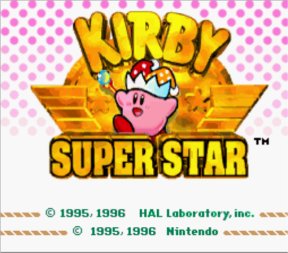
Instead of breaking down every element, let’s just focus on the big ones: first, co-op play.
This is the game for cooperative play. First, it does a great job of keeping the co-pilot active and practically immortal. If your friend screws up and runs into a Gordo, the deadly sea urchin that mindlessly hangs around or goes bat shit on the walls occasionally, then you have a bunch of options: eat some fruit and make-out with your friend (note: this is the actual co-op healing mechanic), tell him to suicide and run headlong into enemies to gain their powers, or kill your friend yourself and respawn him with full health and his original powers! Plus, your friend can hold down a button and immediately come to you and instantly hide behind you. This is like New Super Mario Bros. bubble mechanic but with more options and infinite suits, so it doesn’t matter what gaming literacy your friend has: they’ll have some fun no matter what.
Another big element: variety. You don’t get one but six games plus three minigames (Gourmet Race doesn’t count as an actual game, in my opinion, but it’s still awesome). The variety, in terms of actual gameplay, isn’t that distinct from one game to another, although The Great Cave Offensive and Milky Way Wishes have their own quirks. The games are still different, particularly in terms of style. Spring Breeze is classic Kirby; Dyna Blade is like a typical SNES game; The Great Cave Offensive is wild, Indian Jones-esque, with an added treasure hunt; Revenge of Meta Knight is gritty cyberpunk; Milky Way Wishes adds all sorts of elements to the Kirby formula, particularly the ability to choose Kirby’s powers and the 2D side-scrolling boss level; and the Arena is where friendship goes to die, but at least its an actual challenge in a Kirby game. Plus, you get three, competitive minigames: Samurai Kirby (reaction based minigame), Megaton Punch (judgment based minigame), and Gourmet Race, although, in the original version, there was no competitive play. These games add a little bit of combative leisure in-between games.
These are just two aspects of a great, older game, never mind the fantastic presentation and iconic soundtrack (Such as Gourmet Race, now a staple of Kirby games). What’s even better is there was a DS remake called Kirby Super Star Ultra that was released in 2008 which added even more games, wifi connectivity, and portability. If you get a chance, definitely check out this game.

